Sea King
Chesapeake Bay Maritime Museum, Uncurated Search Results
Type: Skipjack
Year: 1897
Builder:
Location: Hudson

These records are found in the collection of the Chesapeake Bay Maritime Museum in St. Michaels, Maryland. Uncurated search results are presented to give researchers and interested readers an idea of whether CBMM’s archives contain information about this vessel and whether it may be worthwhile to contact CBMM for further investigation. Uncurated results may be inaccurate or incomplete.
For more information about these items, contact the CBMM curator at collections@cbmm.org, or use the selection buttons below to submit a research request.
Search mode: Exact Name. Search phrase(s): "Sea King". Results returned: 22. Results displayed in this table: 22.
Use these buttons to send uncurated search results to your own app or text document for further research. First, check the box for any row, or click "Select All" then uncheck any rows. Then click "Show Selections". You can then copy your selections from the text box and past them into your app.
| Fetch? | Row ID | Catalog # | Object Name | Title | Artist/Maker | Date Made | Place Made | Description | Full Image | CBMM Cat. Page |
|---|---|---|---|---|---|---|---|---|---|---|
| 1 | 8888.0050.0000.00 | documents | Dr. George Krantz Fisheries Management Collection: | Range, Cir 01/01/1970 - 12/31/1994 | Thisa collection begins on CSC15E2 and continues on 15E3, 15E4 and 15E5. See also photo #1293.Dr. George Krantz Fisheries Management Collection:The collection is scientific data and reports compiled by Dr. George E. Krantz, while working as the director of the Cooperative Oxford Laboratory in Oxford, Maryland. A large component of the collection focuses on the population decline of the American oyster, Crossostrea virginica, due to the presence of two oyster diseases, Perkinsus marinus (Dermo) and Haplosporidium nelsoni (MSX). The collection is mainly comprised of Dr George Krantz's scientific research proposals, research papers, field notes, field surveys, management plans, and laboratory analyses of the American oyster, once the Chesapeake Bay's most abundant resource. The collection also consists of management practices and implementation plans for the Bay's other fisheries, including the striped bass.Biographical BackgroundGeorge E. Krantz received his Ph.D. from Pennsylvania State University in 1965, and then became a Bacteriologist for the Cooperative Warmwater Fish Disease Program at Auburn University. A year later he worked as a Research Microbiologist in Oxford, Maryland for the National Marine Fisheries Society (NMFS), and soon became the Research Microbiologist Leader for the NMFS' Shellfish Mortality Program. From 1970 to 1974, he worked in Florida as the Director of Mariculture and Fish Pathology and as an Associate Professor of Biology and Living Resources at the University of Miami. In October 1974, Dr. Krantz returned to Maryland to work as a research Associate Professor for the University of Maryland. From 1982 until 1987, he was the Director of the State of Maryland Cooperative Shellfish Aquaculture and Technology Laboratory in Crisfield, Maryland and Director of Tidal and Inland Fisheries Division of the Tidewater Administration for the Maryland Department of Natural Resources. From 1987 until he retired, Dr. Krantz was the Director of the Cooperative Oxford Laboratory for the Maryland Department of Natural Resources. As the Director of the Oxford Lab, he planned, directed, and implemented a research program to develop information on the impacts of disease on aquatic resources. Among his many memberships, Dr. Krantz was a member of the American Fisheries Society, World Mariculture Society, Society of Invertebrate Pathology, and the National Shellfish Association. He was also appointed a member of both the Oyster White Paper Committee as well as the Striped Bass White Paper Committee. In which he fought a hard yet successful battle for implementing a total moratorium on the Maryland striped bass fishery as a management practice.Scope and ContentThe collection contains information on the oyster harvest, spat recruitment, disease prevalence, and oyster mortality in the Chesapeake Bay from the 1970s to the early 1990s, with few gaps. The collection can aid the researcher in tracing the decline of the oyster industry due to MSX and Dermo. The collection can also be useful in highlighting the history of Maryland's fisheries Management practices through the striped bass moratorium and other fisheries' management plans.SubjectsAmerican oyster, Crossostrea virginica, Crossostrea gigas, Pacific oyster, Dermo disease, Perkinsus marinus, MSX, Haplosporidium nelsoni, Chesapeake Bay fisheries, fisheries management, striped bass, Aquaculture, George E. Krantz. Subject: George Krantz | No image URL. | View | |||
| 2 | 8888.0001.0000.00 | documents | Howard I. Chapelle Papers | Chapelle, Howard I | Exact 01/01/1901 - | The papers of Howard I. Chapelle consist of notes, printed materials, articles by others, some plans and correspondence. Much of the material is not original, but is source material collected by Chapelle.<br /><br />The papers are divided into three basic sections: 1. Correspondence, 2. thematic folders, and 3. whole notebooks by Chapelle. Papers are arranged into the most specific topic heading as possible. However, a researcher would be advised to peruse the subject headings before beginning specific research. | No image URL. | View | ||
| 3 | 8888.0014.0000.00 | documents | John Roberts Sherwood (1843-1929) Papers (1863-190 | Range, Exa 01/01/1843 - 12/31/1929 | John Roberts Sherwood (1843-1929) Papers (1863-1904). Service papers of Naval engineer John R. Sherwood, correspondence, orders, medical determinations.Papers given to the museum by Robert Fuller, a descendent of John Sherwood.Biographical BackgroundSee attached biography done by family member. Scope and ContentThe materials in this small collection pertain to the Naval service career of John Robert Sherwood. Sherwood served in the Civil War on a variety of ships. He served aboard the following:USS. CERESUSS MONOCACYUSS SOUTH CAROLINA USS STEAMER MEMPHIS USS GUERRIERE USS DONThe papers would be interesting to researchers in Naval history, or routine Civil War procedure.SubjectsCivil War; Navy; John R. Sherwood. Boats listed by name in subject cards.Introductory NoteFor many reasons, information on the forebears of John Roberts Sherwood and his wife, Isabella Miller Sherwood, our common ancestors, is incomplete. Early in the 1890s the Baltimore fire destroyed all the city records of births and deaths; the Broadway Methodist Church, of which John and Isabella and an assortment of other Sherwoods were members, no longer exists as such, and its records are said to be stuffed away in a Baltimore attic; but the chief causes for gaps in our knowledge are that John Porter Sherwood died before his son, John Roberts Sherwood, was born and that his widow, Rebecca Fox Sherwood, did not, as far as we know, keep in touch with her son's Sherwood relatives.Buried in Greenmount Cemetery in Baltimore is Philip Sherwood (1775-1852), described on the tombstone as "A Defender of the City in 1812" and listed in the first Baltimore Directory as a clerk living on Ann Street in the Fells Point section of the city. He was the first Sherwood recorded as a Baltimore resident. His wife, Sarah Porter, who died in 1848, is also buried there, as are four of their twelve children. Philip Sherwood may have come to Baltimore from Talbot County on the IMaryland Eastern Shore, where many Sherwoods appear in records, but no firm proof, such as baptismal records, has yet turned up. "Sherwood" is not an uncommon name in England, and Sherwoods are listed among the earliest settlers of Connecticutand Virginia as well as Maryland. The oldest son of Philip and Sarah Porter Sherwood was John Porter Sherwood, born August 28, 1810. He married Rebecca Fox, the daughter of Charles James Fox, an innkeeper in Fells Point, on June 24, 1835. John Porter Sherwood is variously described in early records as a sea captain, a ship's carpenter, and a ship builder, but could, of course, have been all three within his lifetime. He died of yellow fever in the West Indies and was buried on October 28, 1842, in St. Thomas, then a Danish colony in the Virgin Islands. According to one source, his widow later married someone named Webb; her date of death and place of burial are not now known.The origins of Isabella Miller Sherwood's family are similarly difficult to trace, beyond her parents.1John Roberts Sherwood(1843-1929)John Roberts Sherwood, the son of John Porter Sherwood and Rebecca Fox Sherwood, was born in Baltimore on July 16, 1843. He was named for Captain John Roberts, a neighbor and family friend. He attended public schools in Baltimore and had a year of specialized training in marine engineering. After serving as an apprentice, he worked for six months as the engineer in a mill. On January 6, 1864, during the Civil Liar, he Joined the Navy as assistant engineer on the Ceres, seeing action when she engaged the Confederate ram Albemarle, and later was wounded while running a Confederate gun battery on the Roanoke River in Pamlico Sound, He also served on the frigate Guerriere under the famous officer, Admiral Davis.One account states that he resigned from the Navy at the end of the Civil War in 1865 and another that he stayed in until 1869. In any case, he next became an engineer for the Baltimore Steam Packet Company, generally known as the Old Bay Line, which operated a fleet of passenger and freight ships on the Chesapeake between Baltimore, Norfolk and Newport News. He worked his way up steadily in the company: he superintended the building of all the new steamers on the line and designed the "Bay Boats" specially for navigating Chesapeake Bay. His design for these was adopted not only by the Old Bay Line but also by its chief rival, the Chesapeake Line. He was appointed superintendent engineer after only five years, then general manager, vice-president, and finally, on May 7, 1907, he was elected President and General Manager. Until then, the president of the Seaboard Air Line Railroad, of which the Old Bay Line was a subsidiary, had always also acted as president of the Old Bay Line. John Sherwood was the first person appointed to a separate presidency. Moreover, most of the senior members of the companyhad been Confederate sympathizers, while he, of course, had served in the Navy and fought for the Union. His success in the company was a major tribute to his character and to his ability as a marine engineer. He retired in October, 1918, at the age of seventy-five.John Roberts Sherwood married Isabella$ daughter of Joscph Miller of Howard County, on May 6, 1867. They had seven children: John, Willie, who died in infancy, 'Watson, Edna, Virginia, Lillian, and Anita. At first, the family lived throughout the year in a house on Baltimore Street opposite Patterson Park, but sometime in the late 1880s John Sherwood bought a 130-acre farm about fifteen miles northwest of the city near Pleasant Hill and between Owings Hills and Soldiers'Delight, This became their summer home. About 1905, afterhis older son had married and built a house on Park Heights Avenue in northwest Baltimore near Seven Mile Lane and just inside the city limits, John Roberts Sherwood built one nearby at 7105 Park Heights Avenue. Near the same time, he built a third house in Sarasota, Florida, overlooking Sarasota Bay on Gulfstream Avenue, As President of the Old Bay Lines he was a member of the board of directors of the Seaboard Air Line, and the extension of the railroad from Tampa to Sarasota was largely due to his advice. The Ringling family's choice of Sarasota as a winter home for themselves and the circus was a direct result of this extension which the circus trains could use. Thereafter, he divided his time each year among his three homes. In April, 1929, he fell on the stairs in his house an Park Heights Avenue-and baoke*his.hip. He developed pneumonia and died on April 24th. He was buried in the family plot ins Druid Ridge Cemetery.His first grandchild and namesake gives this description:"He was very kind to me, took me on many trips on the Bay andto his place in Florida. I spent much time on the farm with him,walking, talking, hunting, close to nature, for which I am grateful. . . . He loved Florida, its fishing, walking, climate and general atmosphere. He had a small motor boat which he used for trips all over Sarasota Bay, the inlets and passes.. On the farm he loved to hunt for rabbits and the various kinds of birds, whchwere abundant."He was generally considered a handsome man, and in his later' years he bore a striking resemblance to King George V of England, partly because his beard was cut in the same style. On summer Sundays at the farm he enjoyed watching the assorted grandchildren, gathered for a Sunday visit, playing games on the lawn and would sometimes dispense shiny new quarters to them (this in a day when John D. Rockefeller was dispensing dimest). He also enjoyed drinking mint juleps in the summer, and the younger grandchildren competed with each other to see who could stir the glasses to produce the most frost on the outside, the mark of a good julep. This was, of course, during Prohibition, but whiskey was readily available from a variety of sources and, with a doctor's prescription,could be bought legally from drugstores.The entry on John Roberts Sherwood in Baltimore: Its History and Its Feople (New York: Lewis Historical Publishing Company, 1912) includes this description:In politics Captain Sherwood is a Republican, but has always refused to accept public office, with the exception of serving at intervals on the jail and harbor boards. He possesses, however, that true public spirit and rapidity of judgment which enable him, in the midst of incessant business activity, to give to the affairs of the community effort and counsel of genuine value. His advice is frequently solicited and not seldom has his penetrating thought added wisdom to public movements. A man of most courteous manners, he is yet firm and unyielding in all that he believes to be right.The author continues by saying thatCaptain Sherwood is the most home-loving of men, his devotion to his family being equaled only by his devotion to business, and so desirous is he to spend in the society of his wife and children all the hours not demanded by duty, that he is a member of not one club, no social organization, albeit he is a man of genial nature, possessing attractions sufficient to lure him from his fireside. Subject: John R Sherwood | No image URL. | View | |||
| 4 | 8888.0016.0000.00 | documents | Albert E. Brown and Bro Papers<CR><CR>The collection i | Brown, Albert __Creator | Exact 02/01/1988 - | Albert E. Brown and Bro Papers<CR><CR>The collection is comprised of some of the correspondence and business papers concerning the Brown's Sail Loft in Winona, Maryland. Included are many sail plans for work and recreational boats. These papers were retrieved by museum staff from the derelict sail loft with the permission of the owner. Many are damaged or, deteriorated.Biographical BackgroundAlbert E. Brown and Bro/ sail.1oft~:~was located at Wenona, on the southern tip of the island. The Loft was founded in 1870 by Capt. John Stubbs. In 1890 he was bought out by Henry Brown, born in England, and who served as a seaman in the Royal Navy. He learned the art of sailmaking when he came to the United States during the Civil War and joined the United States Navy.Henry constructed the present building. When he retired in 1919 his son Albert took over the sail loft. Albert's son Henry, in turn, started at the loft when he was 12 years old and took over the business in 1956. Henry G. Brown retired about 1980 and the building has stood empty ever since. In 1986 the old sail loft changed hands.In its heyday, the business was one-of the region's leading sailmakers and had a reputation for old-fashioned, quality workmanship. Orders for sails came from all across the country and from overseas.Scope and ContentThis material represents those papers that were salvagable and that remained in the sail loft after the business had closed. They give considerable insight into the operation of one of the country's most well-known sailmakers.The majority of the papers are correspondence written to the sail loft concerning orders for sails, frequently accompanied by a sail plan and an estimate. Of value are a number of sail plans for the oyster dredging fleet, that the loft kept on file for repeat orders, and letters concerning well-known Bay yachts. Many of these boats have long since disappeared. Sail Loft Amps (1923 - 1974)Brown Papers, p 2An index of boats is available.Correspondence was filed under boat name where it was known, and by correspondent's last name if-no specific boat was mentioned (except for one" design boats which are filed under class name).Other papers include"account books and miscellaneous business papers which provide an overview of 1"the finances of a traditional sailmaking business.Sub'ectsSailmaking Subject: Albert E. Brown and Bro. | No image URL. | View | ||
| 5 | 8888.0044.0000 | documents | Oystering Ephemera Collection | An artificial manuscript collection of materials relating to the oyster industry in the Chesapeake Bay there are 2 series in this collection from different sources.<br /><br />The Series 1 collection consists mostly of letterheads, billheads, price lists, trade cards, labels, and related items, including correspondence for a large number of oyster and seafood packing houses, some of which also dealt with fruit packing. Many of these companies were based in Baltimore, Maryland, but packers in Virginia, Massachusetts, and Connecticut are also represented. Other items in the collection include envelopes, checks, mailing tags, receipts, advertisements, recipe booklets, and ledgers.<br /><br />The Series 2 collection includes photographs and stereoviews, oyster advertising material, restaurant menus, trade cards, comics, sheet music, post cards, business receipts, and books/booklets. The collection is organized by category, Chesapeake related, and general oyster material and was collected by Michele and Clifford Krainik. | 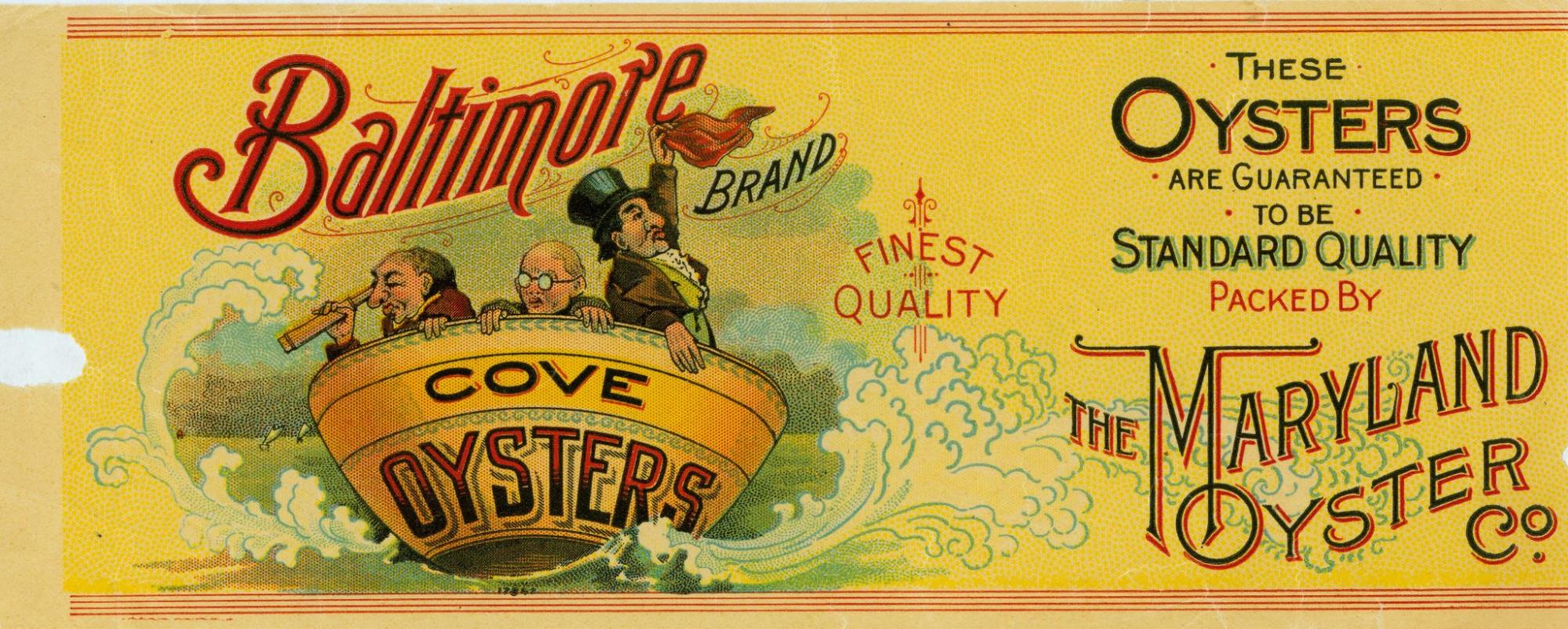 | View | ||||
| 6 | 8888.0087.0000.00 | documents | H. M. Rowe & Co., Oyster Packers:BackgroundI | Range, Cir 03/01/1882 - 07/31/1887 | H. M. Rowe & Co., Oyster Packers:BackgroundIn 2001 the museum purchased four large, leatherbound books consisting of volumes labeled "Ledger", "Journal", "Cash", and "H. M. Rowe & Co." The latter contained no readable entries. The Journal contained entries from 1 March 1882 through 31 August 1885; Cash had entries from 1 September 1885 through 16 July 1887; and the Ledger covered the period from 1884 through July 1887.Wood's Baltimore City Directory, 1874 (Baltimore: John W. Woods), at p. 492, lists "Rowe, H. M. & Co (H. M. & W. H. Rowe) oyster packers, 68 Boston". Also, H. M. Rowe is listed at "393 e Pratt", and Wm. H. Rowe is listed at "395 e Pratt". Finally, James B. Rowe, bookkeeper, is listed at "393 e Pratt". From this it is evident that the Rowe company was in the oyster packing business as early as 1874. Information contained in the three volumes suggests that the company ended its business in July 1887. Polk's Baltimore City Directory, 1902, has no listing for the company.In 1882 Joseph W. Brooks (1832-1915) built a schooner named H. M Rowe at his yard in Dorchester County, MD. (See Pete Lesher, "The Industrious Shipbuilder: Joseph W. Brooks" (The Weather Gauge, v. 36, No. 1, Spring 2001, pp. 3-11 and 33). A photo at p. 7 shows the Rowe with her homeport as Deals Island. The vessel's first owner was Caleb J. Moore whose connection with the Rowes is not known. As shown below, however, the Rowe company purchased oysters from the vessel over several years.Scope and ContentThe Journal and Cash volumes reflect receipts and disbursements over a five-year period. Many of the disbursements were small amounts to the three Rowes; many others were to named recipients or for such expenses as stamps, labels, etc.The Journal (pp. 1-239) is of interest because it shows on a day-by-day basis all receipts and disbursements from 1 March 1882 through 31 August 1885. Disbursements cover everything from postage stamps, newspaper purchases (New York Herald, Baltimore American), payments to the Rowes and their employees, to payments for oysters delivered by ships. Among many vessels to which payments were made were the sloop Morning Light, and schooners Sea Belle, Sharps Island, Nautilus, Exchange, H. P. Barnes, Maid of Erin, Ann Virginia, Two Brothers, and Lewis Taulane. Of special are payments to the schooner H. M Rowe. These began on 6 October 1882 with the entry (p. 45) showing a payment of $50.00, and the entry "name & colors". Subsequent entries show payments to the vessel throughout the years 1882 until 19 January 1885. Most payments were for relatively large amounts apparently for cargos of oysters: examples are payments of $315.00 on 8 December 1882 (p. 61), $511.56 on 27 December 1882, and $455.05 on 11 January 1883.However, the key portion of the collection is contained in the Ledger. Between pages 70 and 261 the entries show shipments of oysters to numerous buyers in a variety of states and Ontario, Canada. Each entry shows the date of shipment, the quantity shipped (barrels, half-barrels, kegs, tubs), the grade of the shipment(standards, selects), the price of the shipment, and the payment dates and amounts, almost always in cash. The Ledger also shows that each of the Rowes owned one-third of the value of the assets of the company (pp. 4-5), but that H.M. Rowe held the most capital (pp. 30-43). Although the Rowes were all partners in the firm, we do not know what their relationship was to each other.A second important part of the Ledger reflects payments for merchandise to numerous individuals and companies (pp. 301-329).In short, although this company was only one of many oyster packers and shippers in Baltimore during the period covered by these volumes, clearly its business was widespread and apparently lucrative: when the company apparently wound up its business on 16 July 1887, the total capital split among the Rowes was about $21,665, a fair amount for the time. | No image URL. | View | |||
| 7 | 8888.0062.0000.00 | manuscript | Maryland Crabmeat Company Collection | Range, Exa 01/01/1939 - 12/31/1946 | No Address - Crisfield - Somerset - Eastern Shore - MD - 21316 - USA | This collection consists of documentation from the Milboume Oyster Company and the Maryland Crabmeat Company. The Milbourne documents came from a plant in Stockton, MD. The material dates from 1939 to 1946 and is contained in Archival Box 1. The documents are arranged as follows: orders and statements for oysters, clams and crabs; receipts, statements and bills from local supply companies; tax receipts; license information and a list of checks paid out.Maryland Crabmeat Company documents date from 1981 to 1992 and are contained in Banker Boxes 1 through 10. The documents are arranged as follows: sales and inventory of products, bills of lading, taxes and income statements, suppliers and vendors, accounting records, and payroll records. | 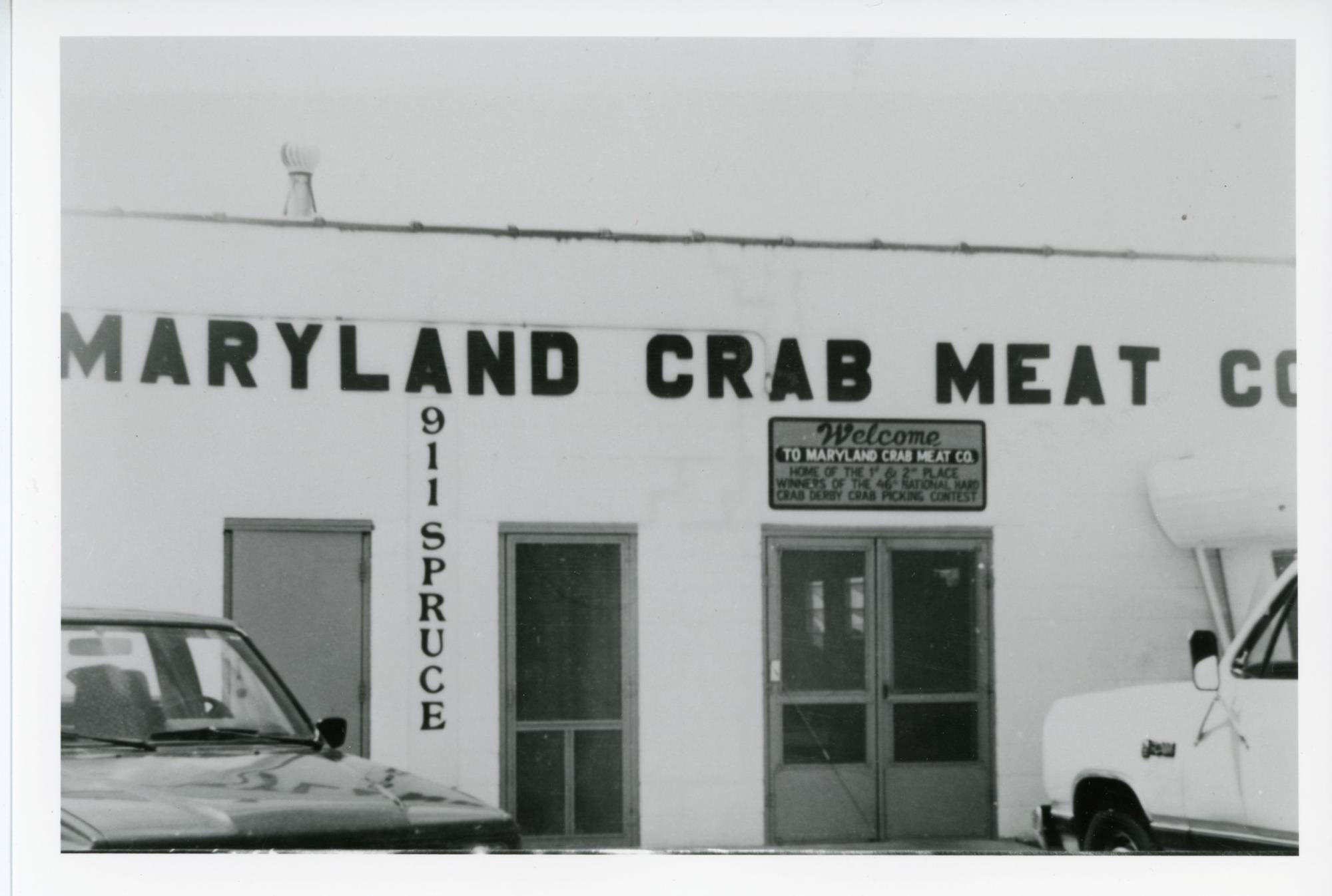 | View | ||
| 8 | 1964.0005.0001.00 | models | Rigged model, case and stand. sch USS ENTERPRISE | Gibson, R H __Creator | Exact 01/01/1956 - | Full model, case and stand. USS ENTERPRISE. Excellent quality and condition. Model after Antoine Roux's sketch 1806, and lines of "Vixen" in Chapelle's "Sailing Navy" by R. Hammond Gibson. | 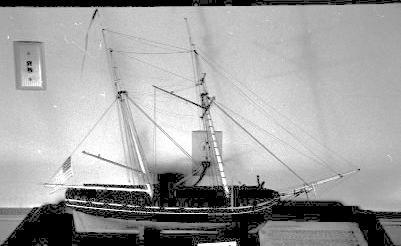 | View | ||
| 9 | 1964.0005.0002.00 | models | Full model, case and stand. schooner USS NAUTILUS. | Gibson, R H __Creator | Exact 01/01/1956 - | Full model, case and stand. USS NAUTILUS. Excellent quality and condition. 3/16" scale model by R. Hammond Gibson. | 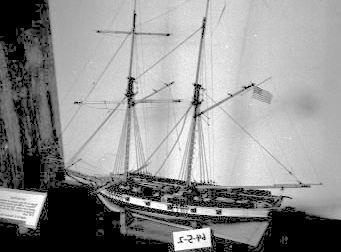 | View | ||
| 10 | 1964.0005.0003.00 | models | Full model of the brig JOHN GILPIN | Circa 01/01/1964 - | Full model of the brig JOHN GILPIN. Made of wood. Condition: fair. | 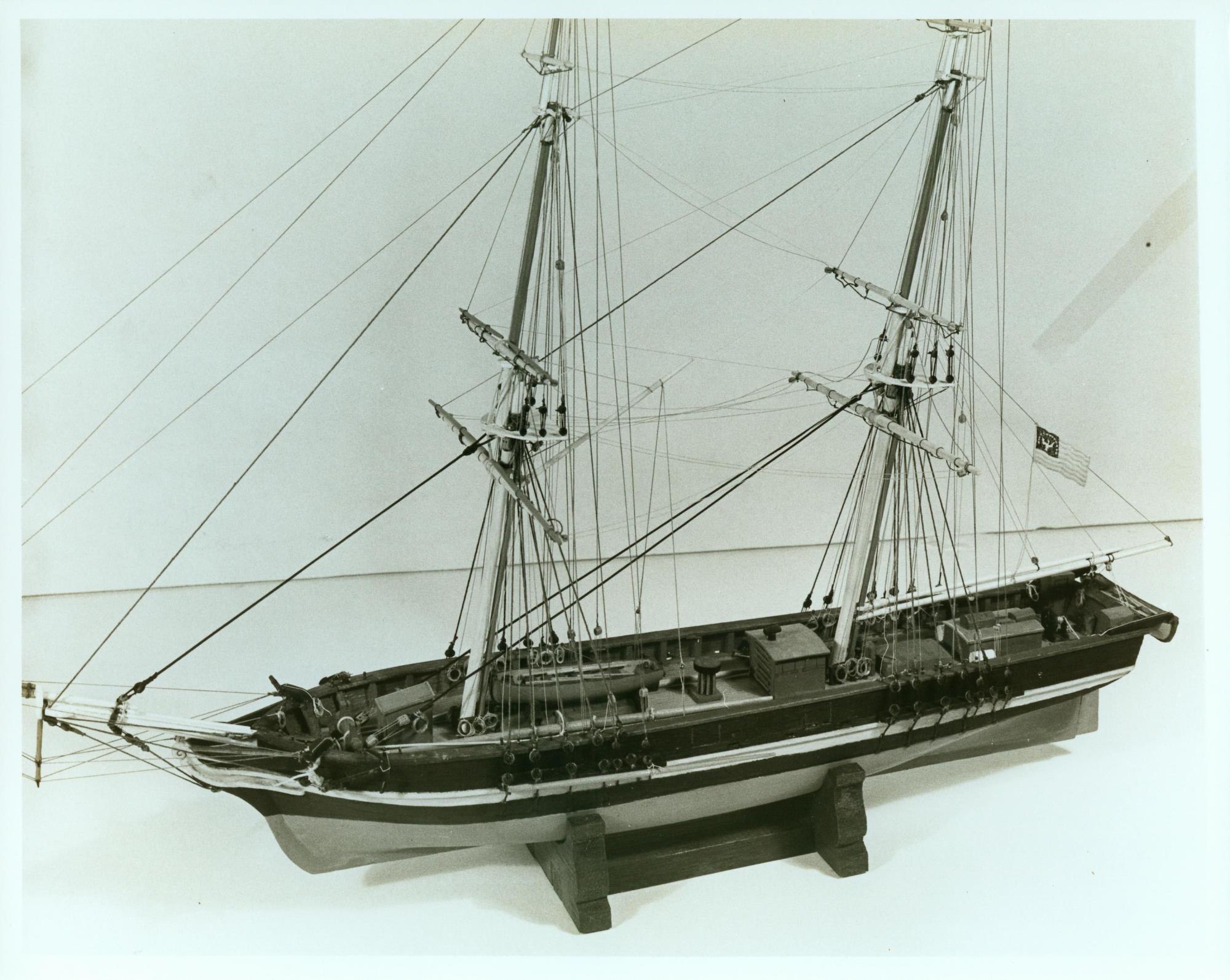 | View | |||
| 11 | 1986.0077.0002.00 | outboard engines | MONTGOMERY WARD "SEA KING" model 64EA outboard eng | Montgomery Ward Co, __Creator | MONTGOMERY WARD "SEA KING" MODEL GASOLINE OUTBOARD MOTOR; MODEL#64EA-9002A; SERIAL # 381-06337; MADE OF ALUMINUM WITH STEEL GAS TANK; ORIGINAL DECALS LARGELY INTACT. Materials: ALUMINUM,STEEL Negative #: N2017 R4 | 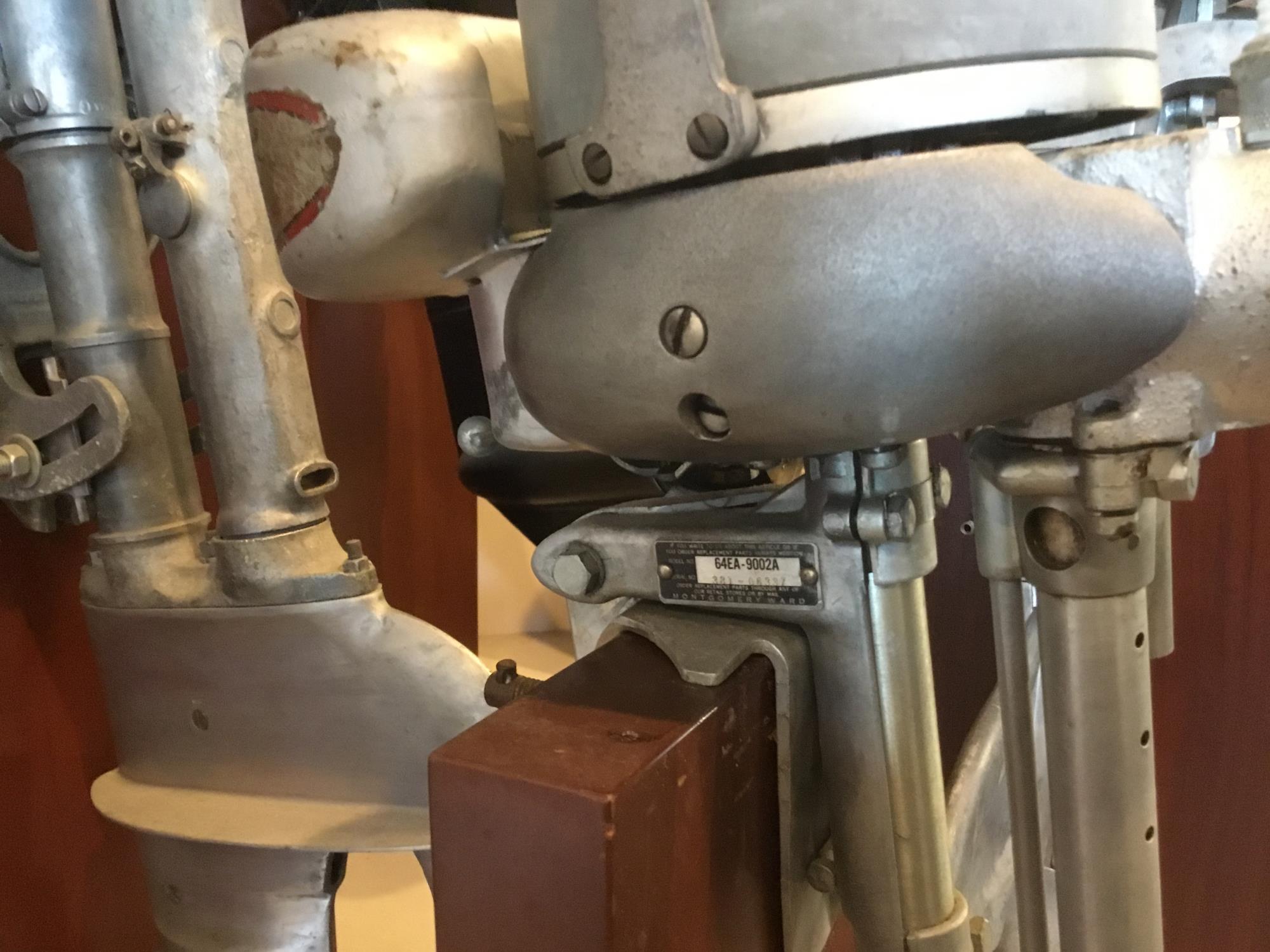 | View | |||
| 12 | 2002.0036.0001.00 | oyster cans | Pint oyster tin, King Carter Brand, Irvington, Va | Range, Cir 01/01/1975 - 12/31/1999 | "King Carter Brand Supreme in Taste and Quality. From the Famous waters of Chespeake Bay, Oysters "pearl of the Sea - see top for size designation." Logo on side, "Oyster Institute of North America." "one pint, Irvington VA, Oysters, one of the most complete food items - keep well iced." The can is cream with red, blue, yellow, green ink, with picture of oyster plate with oyster, sauce, lemon wedge. Condition: fair, some dents. | 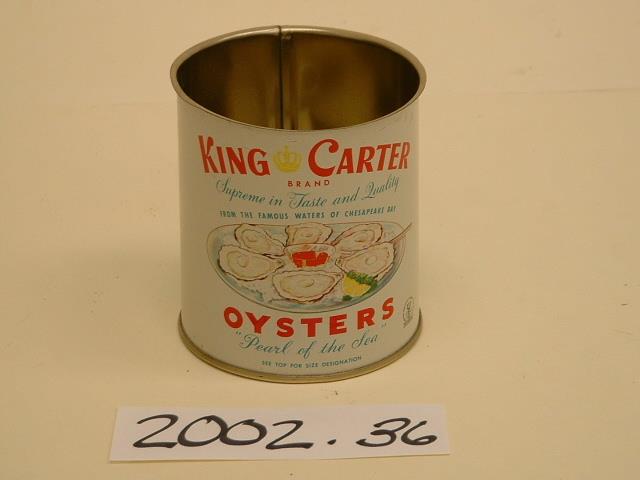 | View | |||
| 13 | 2002.0040.0237.00 | oyster cans | Gallon oyster tin, Virginia Seafoods King Carter | Independent Can Co., __Manufacturer ||Virginia Seafoods Inc, __Packed by | Range, Cir 01/01/1929 - 01/01/1963 | Cream background with aqua and red lettering, plate of oysters on the half shell pictured with lemon and sauce, yellow crown between "King" and "Carter". Front: "King Carter Brand, Supreme in Taste and Quality from the famous waters of Chesapeake Bay, Oysters, 'Pearl of the Sea' ", Oyster Inst. of N. A. trident symbol. Left Back: Ship's wheel, lobster, fish, clams, pictured, "Irvington, Virginia", "Oysters, one of the most complete food items". Right Back: "VA -- 84, Packed by Virginia Seafoods Inc.", same picture as on left, "modern plant" Lid: Gold-tone, "Oysters Standards", embossed. Condition: Very good, some scrapes. Material: Steel, tin, paint. | 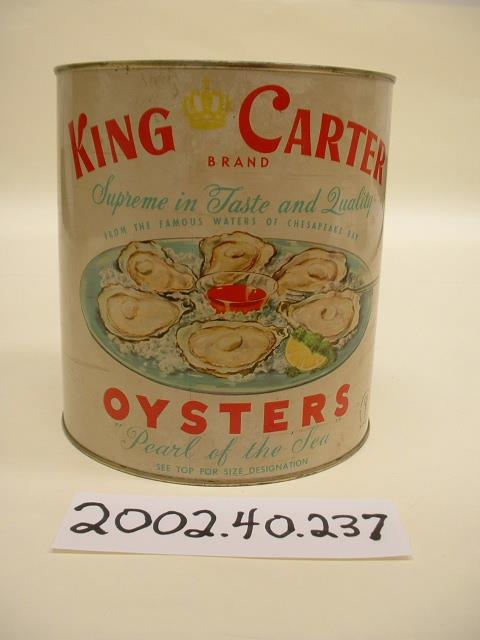 | View | ||
| 14 | 8888.0098.0000.00 | papers | Burgess manuscript collection | This collection is housed in 24 boxes, starting on CSC 15A2 and continuing on to 15A3, 15A4, 16A1, and 16A2<CR><CR>The collection is broad in scope and content. It includes about 100 trailboards and name boards, and many other artifacts obtained from Chesapeake Bay vessels of all kinds; years of correspondence (covered in this finding aid), much of it acquiring background for and arranging the publication of his books, particularly those about the schooners Albert F. Paul and Purnell T. White; many of his photographs; and numerous clippings containing articles by and about Burgess.Among the highlights of the collection are a number of documents from the late 19th century such as invoices, receipts, and note from George P. Bailey, of Kinsale, VA, a dealer in wood, ties, etc., and the canner of the "Pride of Westmoreland" brand tomatoes and commission merchants Courtney & Kennan (see Box 17). Also, the lengthy correspondence (1946-1969) with the Baltimore Sunday Sun about articles Burgess submitted for publication, including the ""I Remember When" series (Boxes 19 & 20) | No image URL. | View | ||||
| 15 | 8888.0156.0000.00 | papers (document genres) | Marine Engine Materials | Marine Engine Materials: Series 1, Gerald Dunn; Series 2, William B. Wimbrow; Series 3 Misc. | No image URL. | View | ||||
| 16 | 0000.1396.0102 | photographs | Fishing boat Sea King under way in open water. | R. Howe Lagarde | Fishing boat Sea King under way in open water; seen from starboard quarter; she has two masts and an oil screw; no place, no date. | No image URL. | View | |||
| 17 | 1997.0046.0001.00 | ships logs | Log book of Albemarle | Forbes, William __Writer | Log book of the Navassa Phosphate Company's Chesapeake Bay sailing vessel (bark) Albemarle of Baltimore documenting voyages between Baltimore and Navassa Island for guano. 70 pages, stiff board covers with decorative paper in blue and brown. Smaller loose pages in back. Material: Paper, cotton binding, cardboard, ink. Presumably kept by Capt Wm Forbes, found in grandmothers attic (Glenda Harris) | 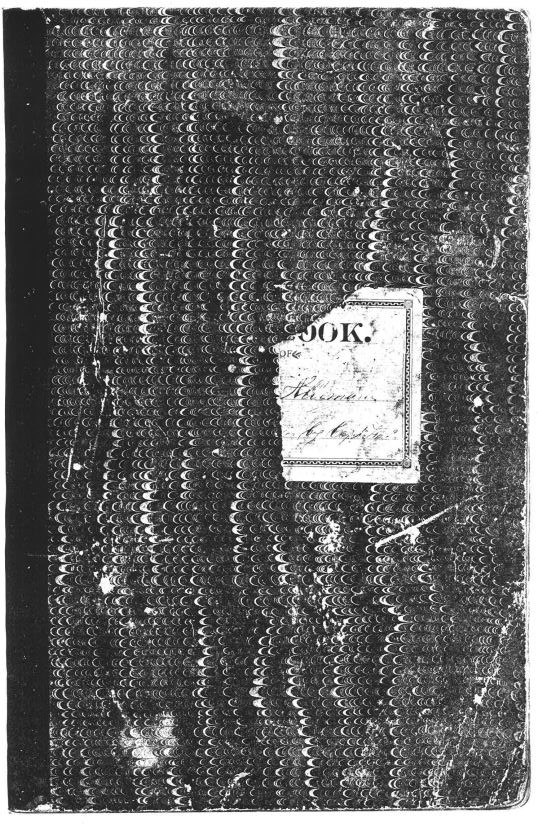 | View | |||
| 18 | 1977.0019.0001.00 | ships plans | Sailmaker Marshall and Godfry Sail Plans | Marshall and Godfry, __Designer | Pratt St - Baltimore - MD | Compilation of Sailmaker Marshall and Godfry Sail Plans for various vessels. Marshall and Godfry were from Pratt St. Baltimore MD. Received by donor in 1936. Compilation is comprised of a canvas cover (stored in a separate folder) and 11 sheets. Compilation includes sail plans for the Schooner Oakland, Sloop Albatros, Three Masted Schooner Ella Barnes, Two Masted Schooner King George, Schooner Salisbury, Pungy Exchange, Topsail Schooner Ellie, Schooner Anna Belle, Schooner Queen Anne, Schooner Hester Ann, Schooner Commerce, Two Masted Schooner Pensacola, Two Masted Schooner Sea Bird, Two Masted Schooner Caledonia, Schooner Golden Rule, Schooner American Coaster, Schooner Edward Bennet, Schooner Florence Lee, Pungy William H. Vickery, Schooner Three Brothers, Pungy Mary Anna, Schooner Onward, Schooner Three Sisters, Yacht Mischief, Sloop Treasure, Schooner Anna G. Gale, Schooner Chesterfield. See 1977.0019.0002.00 for four additional sail plans belonging to this compilation. Material is canvas cover and paper. | No image URL. | View | ||
| 19 | 1977.0019.0002.00 | ships plans | Sailmaker Marshall and Godfry Sail Plans | Marshall and Godfry, __Designer | Pratt St - Baltimore - MD | Compilation of Sailmaker Marshall and Godfry Sail Plans for various vessels. Marshall and Godfry were from Pratt St. Baltimore MD. Received by donor in 1936. Compilation has four sheets and includes sail plans for the Sloop Barbarana, Sloop Eva, Schooner Harry Moore, Sloop Kent Island, Two Masted Schooner North Carolina, Sloop Alexander McCullough, Schooner Thomas B Taylor, Schooner Bohemia, Schooner Alice, and Schooner Willie J. Gibson. See 1977.0019.0001.00 for canvas cover and remaining sail plans. Material is paper. | No image URL. | View | ||
| 20 | 2020.0013.0001 | skiffs, crabbing | Crab Skiff | Parks, Charles H. | circa 1928 | Fishing Creek - MD | Crab skiff built by Charles H. Parks and used to harvest peeler crabs out of Hooper Island. Charles H. Parks opperated a seafood packing house till the 1960s. | 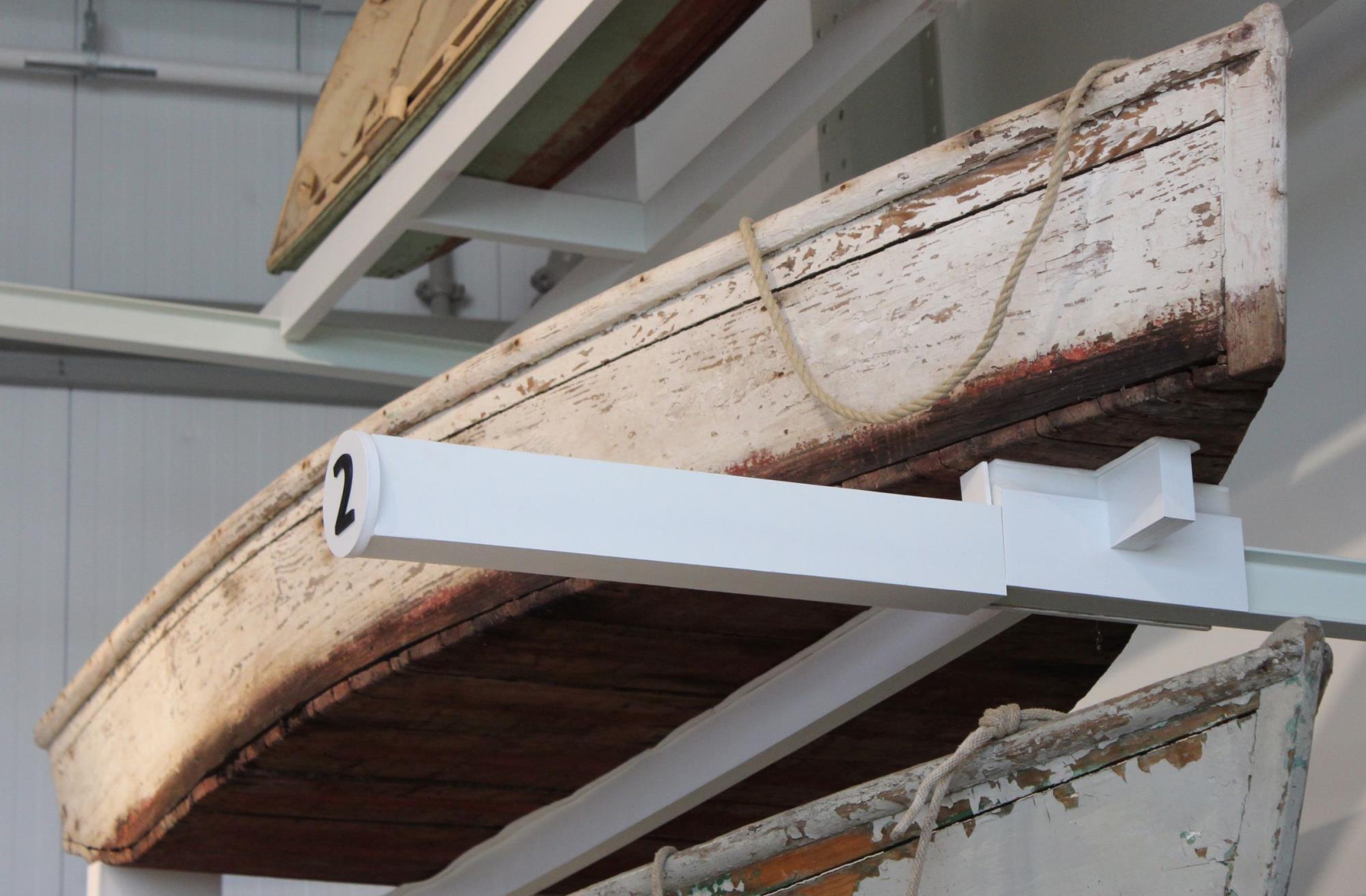 | View | |
| 21 | 1985.0005.0001.00 | steering wheels | Wood steering wheel reportedly from the sidewheel | Wood steering wheel reportedly from the sidewheel paddle steamer RIVER QUEEN. The wheel has 10 spokes connected to the metal brass hub. On the outer ring there are 10 inlaid metal stars and 10 inlaid wood diamonds. The RIVER QUEEN was built in 1864 and was used by President Lincoln during the Civil War. Condition: The ends of 3 spokes are loose and had been repaired at an earlier time, heavily varnished & discolored. Material: Oak? with metal hub, brass. | 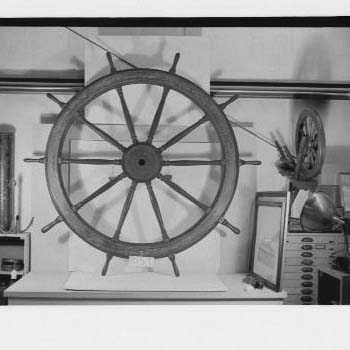 | View | ||||
| 22 | 1997.0056.0001.00 | watercolors (paintings) | Clipper schooner Young Brutus by Roux | Roux, Antoine __Artist | Circa 1819 | Marseilles - France | Clipper schooner Young Brutus attributed to Antoine Roux Jr., starboard view of ship under sail heading into the port at Marseilles, France, crew visible on deck including several Black men, black and white hulled vessel flying US flag and house flag, black lower border with vessel name and capt name.<br /><br />The Roux family were well known for their ships portraits. Living in Marseilles port district they were able to observe many different ships. | 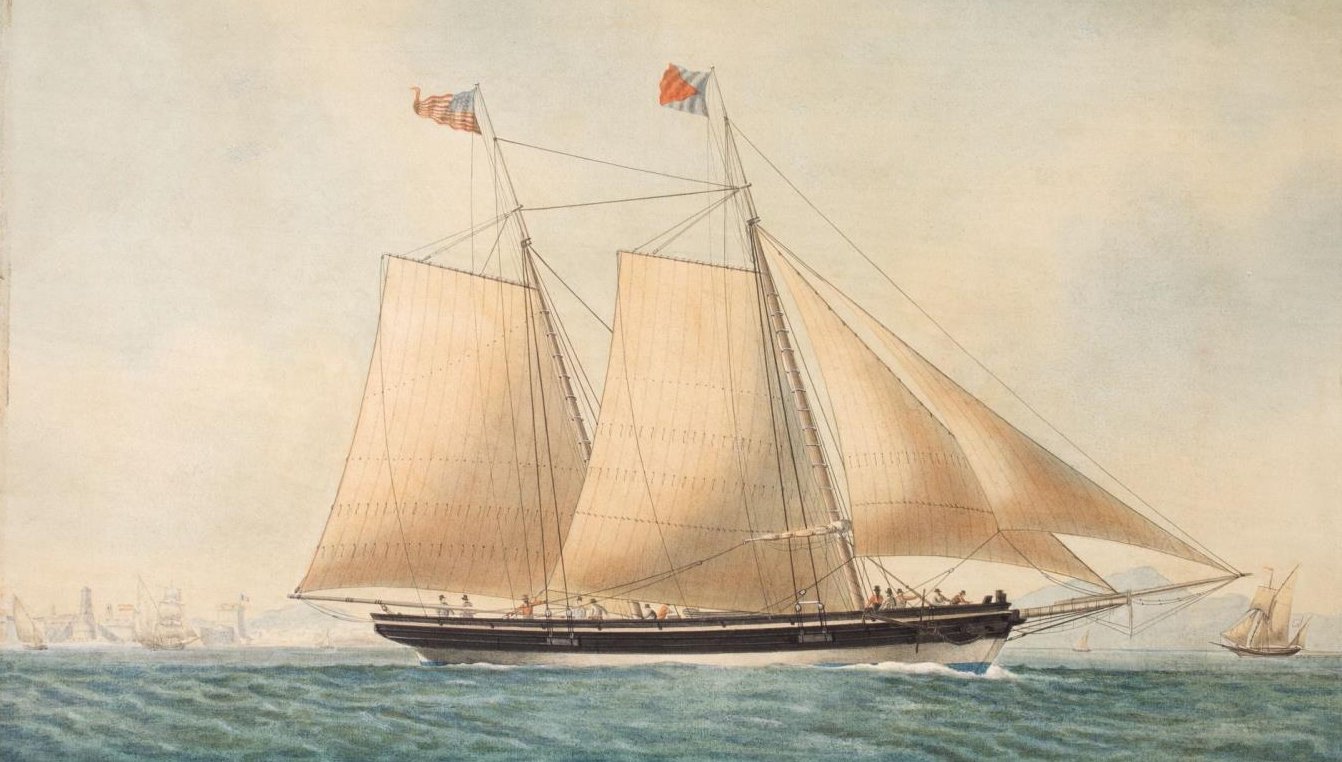 | View |
Created 2026 by Don Barker, CBMM volunteer, for the Chesapeake Shipbuilding Project. shipbuilding@sailingworkboats.es